Trucking Companies in Chicago: How to Find Them and How to Check Them
Thousands of carriers operate out of Chicagoland. The useful question is not who is biggest, but which segment you want and whether the company checks out.

Search for trucking companies in Chicago and you get directories, job boards and rankings, none of which tell you the two things that matter: which kind of work you are signing up for, and whether the company is sound.
Chicagoland has thousands of carriers, most of them small. Sorting them by size is not useful. Sorting them by segment is.
Why Chicago’s carrier base looks the way it does
Metropolitan Chicago is the freight interchange of North America. Roughly 25 percent of all U.S. freight trains and 50 percent of intermodal trains pass through the region, according to the Chicago Metropolitan Agency for Planning. The region holds about 1.1 billion square feet of industrial development, and some facilities handle more than 30,000 trucks a day.
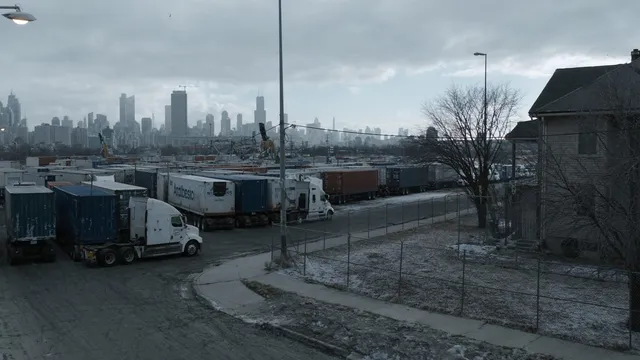
Every container that comes off a train leaves on a truck. That single fact shapes the local carrier population: a very large share of Chicago trucking is short-distance container work, not long-distance mileage. It is why the market supports so many small operators, and why the pay structures here skew hourly.
The four segments, and what each is like to work in
Drayage. Containers between the rail yards, the port facilities and the warehouse belt. Short distances, heavy gate and terminal time, home daily. Pay is usually hourly or per move. The frustration is waiting; the compensation is sleeping at home.
Intermodal and regional. Longer runs across the Midwest, often on a repeating lane. A middle position: more miles than drayage, more nights out than local, generally paid per mile.
Local and city delivery. Retail, food service, building supply. Early starts, physical work, frequently hourly with overtime. The most predictable schedule in trucking.
Over-the-road from a Chicago base. National carriers with terminals in the region. Highest mileage earnings, least time at home.
A driver choosing between two carriers in different segments is not really comparing companies. They are comparing lives.
Where the work physically is
Chicago trucking is geographically concentrated, and knowing the map shortens a job search considerably.
The rail yards sit mostly on the south and southwest sides and in the near western suburbs, and drayage carriers cluster around them because gate turn time is the whole economics of that business. A drayage operator forty minutes from its yards is at a permanent disadvantage, which is why those companies rarely advertise far from where they run.
The warehouse and distribution belt runs south and west along the I-55 corridor toward Joliet and the I-80 corridor through Will County, which absorbed much of the region’s newer big-box distribution space. That is where a large share of local and regional driving jobs are based, and it is why so many Chicago driving jobs are not actually in Chicago.
O’Hare anchors a separate cluster of air-freight and time-sensitive work on the northwest side, with its own pace and its own carriers.
For a driver, the practical consequence is that commute is a pay variable. An hourly drayage job that pays well but sits ninety minutes away in traffic is a different proposition from the same job twenty minutes away, and no job posting will do that arithmetic for you.
How to check any carrier in five minutes
Every interstate carrier must be registered with the Federal Motor Carrier Safety Administration and must carry a USDOT number. That number is the key to a free public record.
Look the company up in FMCSA’s SAFER system. The company snapshot shows:
- Operating authority and status. Active, or not. A carrier whose authority is inactive or revoked cannot legally haul interstate freight.
- Fleet and driver counts. A useful sanity check against what the recruiter told you.
- Insurance on file. Whether required coverage is filed and current.
- Crash and inspection history. Out-of-service rates compared against national averages.
Two practical rules. First, if a company will not give you its USDOT number, stop. It is a public number and there is no reason to withhold it. Second, read the out-of-service percentages rather than the raw crash count: a large fleet will have more incidents simply by being large, and the rate is what tells you whether that is normal.
What the record does not tell you
SAFER is a compliance record, not a workplace review. It will not tell you whether dispatch is competent, whether detention gets paid, or whether the miles promised in the interview exist in practice. Those only come from talking to drivers who work there, and from asking specific questions about averages rather than maximums.
It also will not tell you whether the company is hiring. Carrier hiring in Chicago is cyclical and lane-specific: a fleet may be full on regional and short three drivers on drayage in the same week.
That gap between “who exists” and “who is actually hiring this week” is what recruiting agencies fill. CDL Agency, which handles truck driver recruiting in Chicago, works the carrier side of that gap, matching drivers to open seats by lane, equipment and home time rather than sending applications into a general queue. For a driver, the practical benefit is knowing a seat is genuinely open before applying for it.
What Chicago carriers ask for
Requirements vary by segment more than by company.
Local and drayage work generally has the lowest experience threshold, sometimes taking drivers straight out of school, because the insurance exposure on a short local run is smaller than on a long-haul lane. Regional and over-the-road carriers usually want a year or more, and that is an insurance requirement rather than a preference, which is why it is rarely negotiable.
Endorsements change the picture faster than experience does. Hazmat opens work that a large part of the driver pool cannot take, and tanker and doubles endorsements matter for specific lanes out of the region. In a market with this much container work, a TWIC card is worth having for the facilities that require it.
The paperwork that stops hires most often is mundane: a lapsed medical card, a self-certification that does not match the work, or an unregistered account in the federal drug and alcohol Clearinghouse, which a carrier must query before anyone drives. Having those current turns a two-week start into a two-day one.
Where to start
If you are a driver deciding where to look, the order that saves the most time is: pick the segment first, shortlist carriers operating in it, check each in SAFER, then ask the four pay questions that reveal what a week actually looks like.
Picking the company first, and the segment by accident, is how drivers end up leaving in month two.
Related: what CDL drivers actually earn in Chicago and the FMCSA Clearinghouse, explained.
Frequently asked questions
How many trucking companies operate in Chicago?
Thousands, most of them small. Chicagoland's carrier base runs from single-truck drayage operators working the rail yards to national fleets with regional terminals. There is no single authoritative count, which is why the FMCSA SAFER database matters: it is the register every interstate carrier has to appear in.
How do I check whether a Chicago trucking company is legitimate?
Look the company up in FMCSA's SAFER system using its USDOT number. It shows operating authority and status, fleet size, driver count, insurance on file and the crash and inspection record. A carrier that will not give you a USDOT number is telling you something.
What kinds of trucking work are there in Chicago?
Broadly four: drayage moving containers between rail yards and warehouses, intermodal and regional runs across the Midwest, local and city delivery, and over-the-road work using Chicago as a base. They differ enormously in pay structure and home time.
Which Chicago trucking jobs let you be home every night?
Drayage, local delivery and most intermodal work are daily-home jobs, which is the main reason drivers choose them over higher-mileage regional or over-the-road roles.
Do I need experience to get hired by a Chicago carrier?
Less than you would for long-haul. Local and drayage operators generally have lower experience thresholds than over-the-road carriers, whose insurance requirements are stricter. Endorsements, a clean record and a current medical card matter more than years.